How to Administer Your Injections
Giving yourself a shot can feel intimidating at first, but you've got this. Follow these step-by-step guides to ensure a safe, comfortable experience.
Subcutaneous Injection (Into the Fat)
Common for: Peptides, GLPs
Prepare
- • Wash your hands thoroughly with soap and warm water. Be sure to scrub thoroughly between fingers, on the back of hands, and under nails.
- • Gather all supplies: alcohol swab, syringe with medication, sharps container (use an empty plastic water bottle or detergent bottle with a tight-fitting lid if you do not have a dedicated sharps container), band-aid (optional), and place them on a clean surface.
- • Check your medication: Ensure it is the correct name and dosage.
Choose an Injection Site
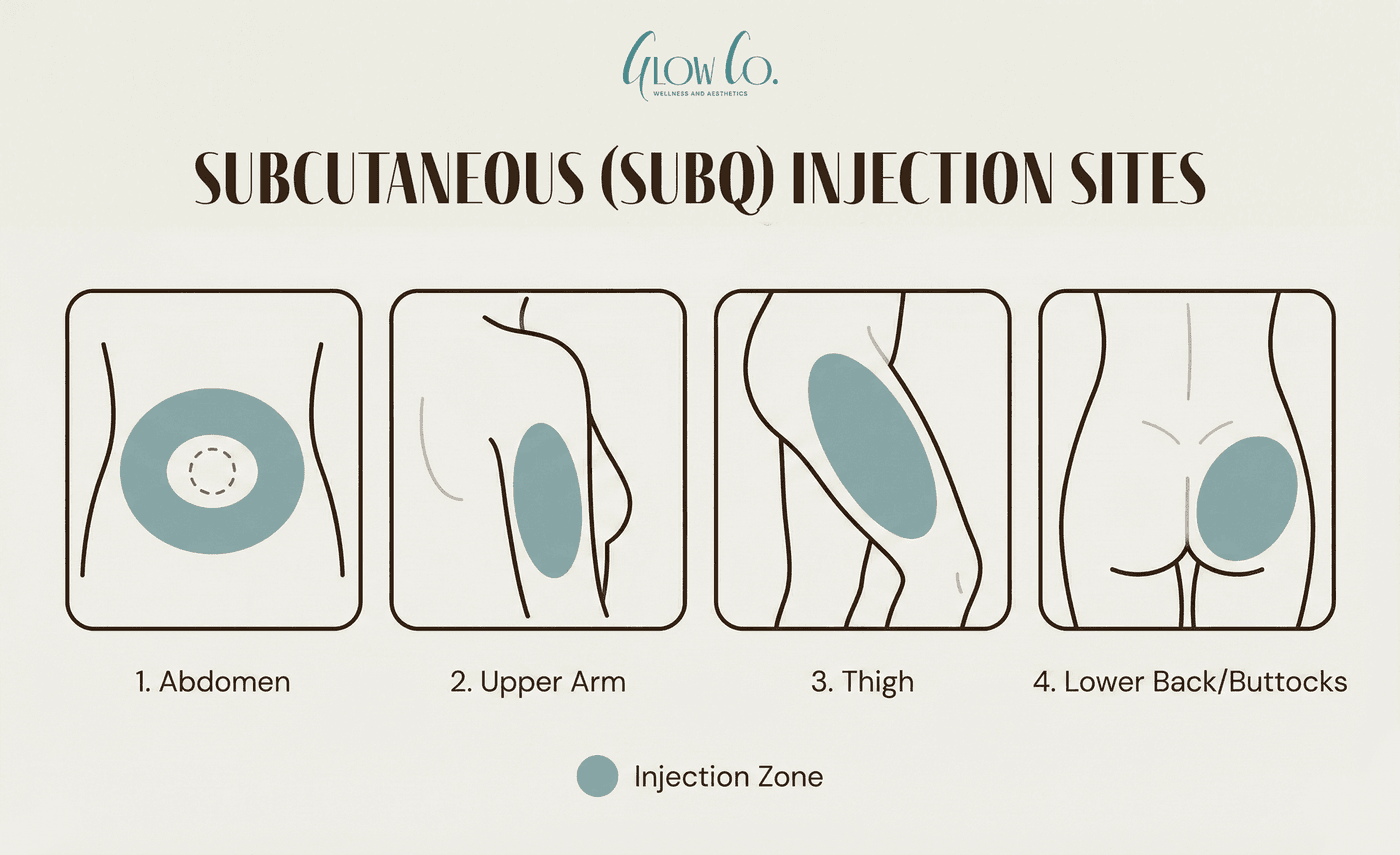
Common sites for a subcutaneous injection include:
- • Abdomen: At least 2 inches away from the belly button.
- • Upper Arm: The fleshy back part of the arm.
- • Thigh: The front or outer part of the thigh.
- • Lower back or buttocks
Tip: Rotate your injection sites each time to avoid irritation or tissue damage
Clean & Inject
- • Wipe the site with an alcohol swab in a circular motion. Let it air dry completely (this prevents stinging!).
- • Pinch a fold of skin between your fingers.
- • Hold the syringe at a 45-degree or 90-degree angle (this depends on the length of the needle and fat thickness).
- • Insert the needle quickly and smoothly into the pinched skin.
- • Slowly push the plunger to inject the medication.
- • Remove the needle at the same angle it was inserted.
- • Apply gentle pressure with gauze if needed (do not rub).
- • Apply an adhesive bandage if needed.
Finish Up
- • Immediately place the needle in your sharps container. Do not recap the needle.
- • Do not overfill sharps container; leave space to securely close the lid.
- • Seal the container with strong tape when full.
- • Label it "Sharps – Do Not Recycle."
- • Dispose of all other used supplies properly.
- • Wash your hands again.
Important Tips:
- • Do not inject into areas that are bruised, swollen, or scarred.
- • Never reuse needles or syringes.
- • Monitor for any signs of reaction, such as redness, swelling, or allergic symptoms.
Your health and safety are our first priority. Should you experience acute or persistent pain or discomfort, seek immediate medical attention from a qualified healthcare professional. For inquiries related to the injection protocol or product specifications, contact the pharmacy or your prescribing physician.
Intramuscular Injection (Into the Muscle)
Common for: B12, certain hormone therapies
Prepare
- • Wash your hands thoroughly with soap and warm water. Be sure to scrub thoroughly between fingers, on the back of hands, and under nails.
- • Gather all supplies: alcohol swab, syringe with medication, sharps container (use an empty plastic water bottle or detergent bottle with a tight-fitting lid if you do not have a dedicated sharps container), band-aid (optional), and place them on a clean surface.
- • Check your medication: Ensure it is the correct name and dosage.
Choose Your Site
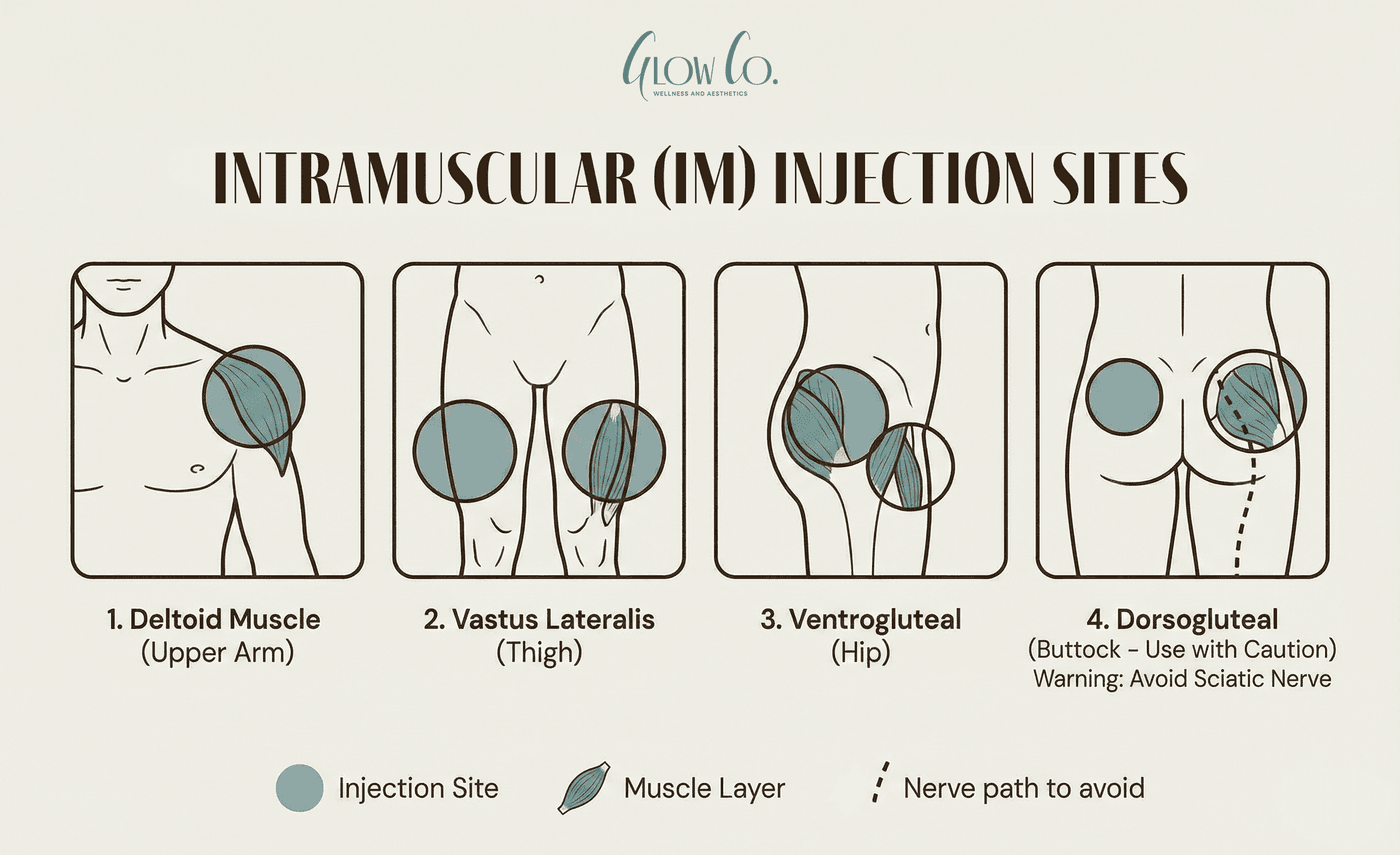
- • Deltoid muscle (upper arm): Used for small volumes.
- • Vastus lateralis (thigh): Preferred for self-injections.
- • Ventrogluteal (hip): Safest site for adults; avoids major nerves and blood vessels.
- • Dorsogluteal (buttocks): Less recommended due to the sciatic nerve risk.
Tip: Rotate your injection sites each time to avoid irritation.
Clean & Inject
- • Wipe the site with an alcohol swab in a circular motion. Let it air dry completely (this prevents stinging!).
- • Stretch or pinch the skin (depending on comfort level).
- • Hold the syringe at a 90-degree angle (like a dart).
- • Insert the needle quickly and fully into the muscle.
- • Slowly push the plunger to inject the medication.
- • Remove the needle at the same angle it was inserted.
- • Cover with band-aid if needed.
Finish Up
- • Immediately place the needle in your sharps container. Do not recap the needle.
- • Do not overfill sharps container; leave space to securely close the lid.
- • Seal the container with strong tape when full.
- • Label it "Sharps – Do Not Recycle."
- • Dispose of all other used supplies properly.
- • Wash your hands again.
Important Tips:
- • Do not inject into areas that are bruised, swollen, or scarred.
- • Rotate injection sites to avoid irritation.
- • Relax the muscle before injection to reduce pain.
- • Never reuse needles or syringes.
- • Do not massage the site after injection, unless instructed.
- • Monitor for any signs of reaction, such as redness, swelling, or allergic symptoms.
Your health and safety is our first priority. Should you experience acute or persistent pain or discomfort, seek immediate medical attention from a qualified healthcare professional. For inquiries related to the injection protocol or product specifications, contact the pharmacy or your prescribing physician.
Injection FAQs
Yes, mild redness at the injection site is very common. It usually fades within a few minutes to a few hours and isn't a sign of anything harmful.
A little itching is normal and can happen as your skin reacts to the needle or the medication. It should go away quickly. Avoid scratching to prevent irritation.
Bruising happens when a tiny blood vessel under the skin is nicked. It's harmless and will fade on its own. Rotating sites helps prevent repetitive bruising in the same area.
A small bump can happen when the medication sits just under the skin (especially with SubQ injections). It typically absorbs on its own within a few hours to a day.
Yes, a bit of tenderness is expected, especially with IM injections. Gentle pressure or a warm compress can help. Soreness usually resolves within a day or two.
Most mild reactions (redness, small bump, tenderness) improve within a few hours. Bruises may take a few days to fade.
When should I contact my provider?
Reach out if you notice:
- • Redness that spreads or worsens
- • A warm or painful lump
- • Fever, chills, or signs of infection
- • A rash that doesn't improve
- • Symptoms lasting longer than 3–5 days
These reactions are rare, but we always want you to feel safe and supported.